
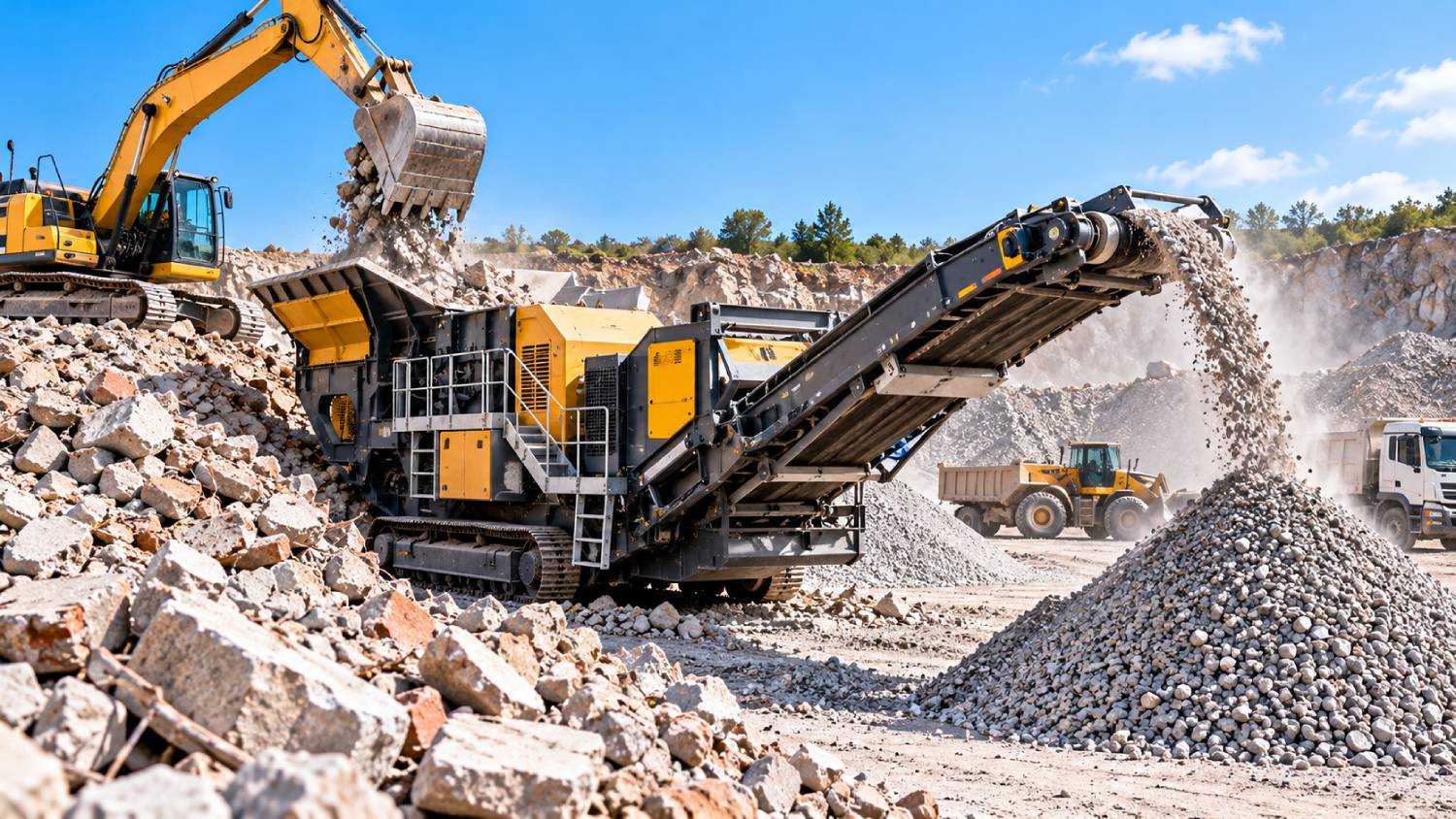
Transporting large quantities of rock, concrete and demolition waste can be expensive and time-consuming. On quarry and demolition sites, moving materials between processing areas or transporting them to external facilities increases fuel consumption, vehicle wear and operational costs. Finding ways to reduce unnecessary movement is therefore an important part of efficient site management.
Using a mobile crusher allows operators to process materials closer to where they are excavated or demolished. Instead of relying entirely on transport vehicles to move unprocessed material elsewhere, businesses can reduce its size on-site, improve material handling and potentially recover suitable aggregates for further use.
How Mobile Crushing Reduces Haulage Costs
Haulage is a significant operational consideration on sites where large volumes of material must be moved. Transporting unprocessed rock or concrete requires suitable vehicles, trained drivers, fuel and regular maintenance.
Mobile crushing equipment helps reduce these requirements by bringing processing operations closer to the material source. This can shorten internal transport routes and reduce the need to move bulky materials before crushing. On demolition projects, suitable concrete and masonry waste can be processed on-site rather than automatically transported to an external recycling facility. The resulting material may then be reused where it meets the relevant engineering and environmental requirements.
However, the financial benefit depends on several factors, including material volumes, transport distances, equipment operating costs and the intended destination of processed aggregates.
Improving Productivity Through On-Site Processing
Efficient material processing helps maintain steady progress across quarrying and demolition operations. Long transport routes, vehicle queues and unnecessary handling can create delays that affect other activities.
Mobile crushing equipment provides greater flexibility because it can be repositioned as work progresses. Tracked machines are particularly useful where the processing location needs to change within a working site. Reducing the distance between excavation, crushing and stockpiling areas can improve material flow. Loading equipment may spend less time travelling, while vehicles can be assigned to other essential tasks.
Productivity also depends on matching the crusher’s processing capacity with the available feed material. Equipment that is too small may cause delays, while oversized machinery can increase operating costs without delivering corresponding benefits.
Choosing the Right Crusher for Different Materials
Different crushing technologies suit different applications. Selecting appropriate machinery requires an understanding of material hardness, feed size, required output and operating conditions.
Jaw crushers are commonly used for primary crushing, reducing larger rocks and demolition materials into smaller pieces. They are particularly suitable for handling substantial feed material. Impact crushers use impact forces to break materials and can be useful for suitable concrete recycling and aggregate production. Their performance and wear costs depend heavily on material characteristics.
Cone crushers are generally associated with secondary or tertiary crushing, particularly when processing harder rock and producing controlled aggregate sizes. Mobile screening equipment can complement these machines by separating processed material into different size categories. This helps operators produce aggregates that meet specific project requirements.
The correct selection should consider the complete processing arrangement rather than crusher capacity alone.
Reducing Material Handling and Site Congestion
Excessive vehicle movement creates additional challenges, especially on restricted demolition sites and busy quarry operations. Multiple transport journeys can increase congestion around loading areas, access routes and material stockpiles.
Positioning crushing machinery strategically can reduce repeated handling and improve the organisation of working areas. A suitable processing location should provide sufficient space for equipment, safe vehicle access and separate stockpiles for incoming and processed materials. Operators must also consider ground stability, overhead restrictions, pedestrian routes and emergency access. Poor positioning can introduce safety risks or create additional handling requirements.
Although mobile equipment offers flexibility, moving it frequently without a clear operational benefit can waste productive working time.
Managing Fuel Consumption and Environmental Impact
Reducing unnecessary haulage can also help limit fuel consumption associated with transporting materials. Fewer journeys may reduce vehicle exhaust emissions, although the overall environmental outcome depends on the crushing equipment and site conditions. On-site recycling can reduce the requirement to transport suitable demolition waste away and bring replacement aggregates onto the site.
However, crushing produces dust, noise and vibration that require appropriate management. Water suppression, suitable operating procedures and regular equipment inspections can help control these issues.
Environmental permits, planning conditions and waste regulations may also apply. Operators should confirm their responsibilities before processing demolition materials or using recycled aggregates.
Practical Steps to Improve Crushing Efficiency
Effective planning and maintenance are essential for achieving reliable performance and controlling costs. Site managers should focus on the following measures:
- Assess material characteristics: Identify material type, hardness, feed size and potential contamination before selecting equipment.
- Plan equipment positioning: Minimise unnecessary transport while maintaining safe access for loading and maintenance.
- Maintain consistent feeding: Avoid overloading the crusher or introducing unsuitable materials that could cause blockages.
- Inspect equipment regularly: Check wear parts, conveyors, screening components and other critical systems according to manufacturer guidance.
- Monitor operating costs: Record fuel use, maintenance expenses, downtime and tonnes processed to assess performance.
- Train operators properly: Ensure personnel understand safe feeding, inspection, emergency procedures and equipment limitations.
These measures support more consistent processing and help identify problems before they cause substantial delays.
Understanding the Costs Before Investing
Mobile crushing can reduce haulage expenditure, but machinery ownership or hire introduces separate costs.
Businesses should consider equipment rental or purchase, fuel or electricity consumption, servicing, replacement wear parts, insurance and operator requirements. Transporting machinery between projects may also require additional planning and expenditure.
A meaningful cost comparison should consider the total expense per tonne of usable processed material, rather than concentrating exclusively on transport savings. For shorter projects, equipment hire may provide greater flexibility. Longer operations with predictable processing requirements may justify evaluating ownership.
Consulting an experienced crushing equipment supplier or suitably qualified plant specialist can help determine the appropriate machinery configuration and operating capacity.
Conclusion
Mobile crushing offers quarry and demolition operators a practical way to reduce unnecessary haulage, improve material flow and make better use of suitable recovered materials. Processing closer to the source can simplify logistics, although the financial and environmental advantages vary according to operating conditions.
Before introducing mobile crushing equipment, assess material characteristics, expected processing volumes, transport distances, site restrictions and total operating costs. Careful planning, suitable machinery selection and consistent maintenance are essential for achieving efficient, safe and financially sustainable operations.
Leave a Reply
You must be logged in to post a comment.